
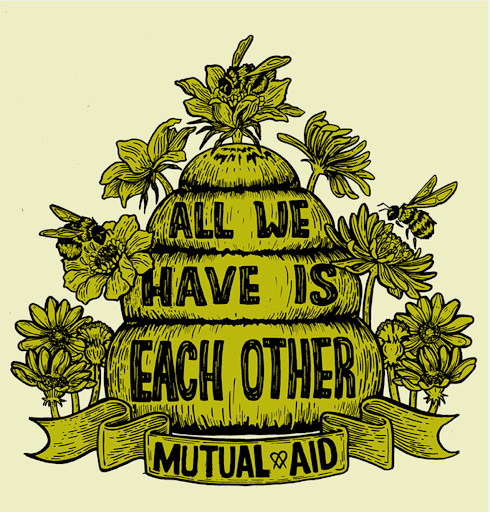
Right now, almost half of American families don’t have enough resources to cover the real cost of living.
Groceries, housing, child care, and health care all cost more these days. Meanwhile, many of the systems people have counted on are being stretched, reduced, or changed in big ways.
This makes me think about something we rarely discuss:
Your group chat could be one of the most important supports you have.
When we think of political organizing, we picture marches, campaigns, elections, and organizations. But a lot of real support happens quietly, out of the spotlight.
It's sending someone $40 for groceries. Sharing a job posting; as any of my friends my favorite pastime is sending them (even if they aren’t looking) jobs and or fellowships I think they would be perfect for. Watching someone's kid because child care fell through. Checking whether an immigration rumor is actually true before someone panics.
Passing along a lawyer's number. Helping someone make rent.
These acts aren’t just kind gestures. Right now, they’re part of how people get by.
This isn’t a new idea. Black, immigrant, Indigenous, working-class, and other marginalized communities have built mutual aid networks for a long time when institutions didn’t meet their needs.
What’s different now is that many more Americans might find themselves needing these networks. Community care can’t take the place of good public policy or working institutions. We also shouldn’t let governments shift their responsibilities onto individuals. But as we push for better systems, we also need to help each other stay alive, housed, fed, informed, employed, and hopeful enough to keep going.
Protests disrupt systems. Policy changes systems.
But community care is what keeps the people working to change these systems going.
Start with your group chat.
You don’t need to create a nonprofit to practice mutual aid. Ask the people already in your life:
What do you have? A car? An extra room? Professional connections? Legal knowledge? Child-care capacity? Airline miles? A Costco membership?
What do you need? Help with groceries? A job? A ride? Someone to watch your kid? Help understanding a government form? A place to stay?
What can we share? Money, time, information, transportation, food, housing, skills, connections.
Who isn’t in the group chat? Who in our community might need support but doesn’t have a network to ask?
What happens when there’s an emergency? Who checks on whom? Who has a car? Who has emergency cash? Who knows a lawyer? Who can provide somewhere safe to stay?
We don’t/ shouldn’t have to wait until the world is on fire to build the relationships that will help us survive the fire.
Start now. Know your people. Know what they need. Know what they can offer. And get comfortable asking for help.
Because community isn’t just who we celebrate with.
Community is who catches us when we fall.